
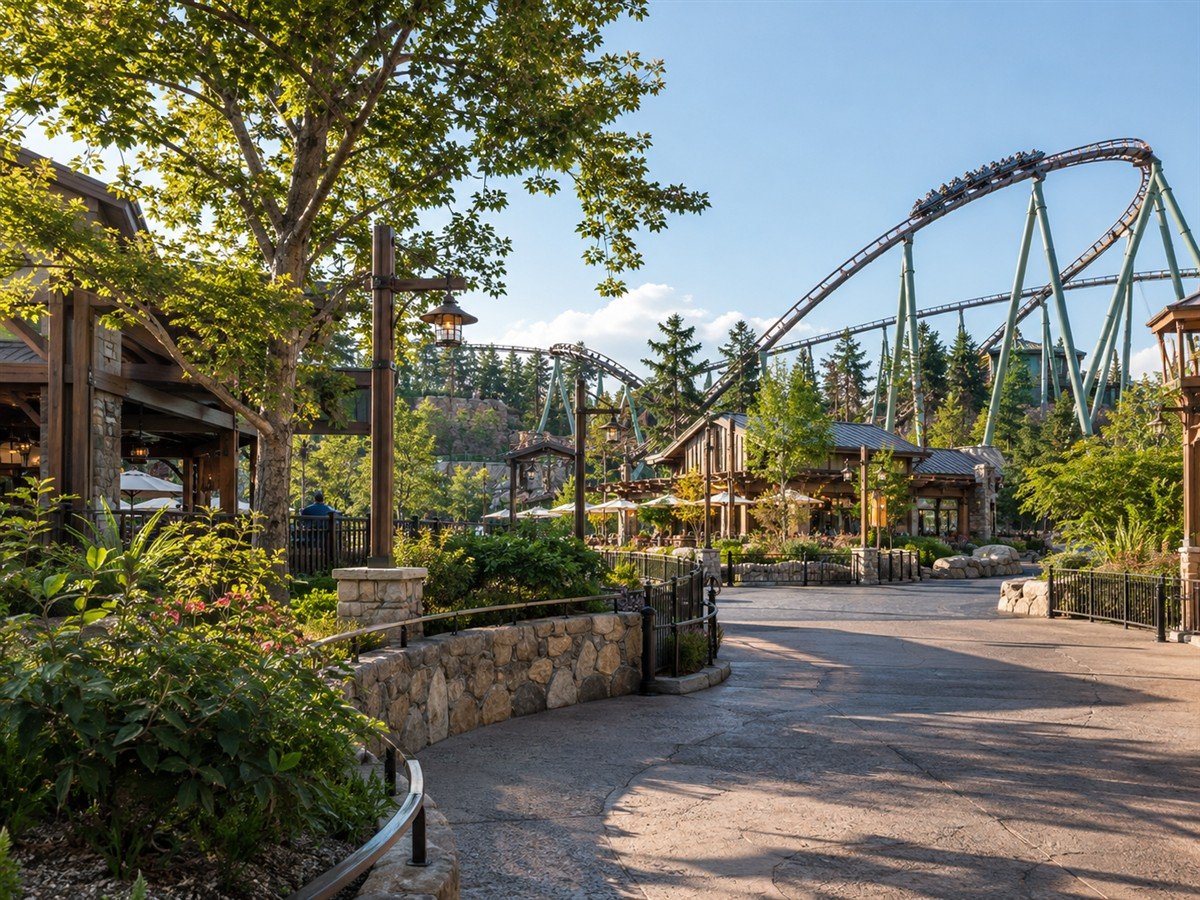
A world worth stepping into.
Give each attraction its moment while making the whole destination feel connected. Landscape, movement and the visitor story shape the experience between rides.
Every decision
is connected.
Explore three perspectives that shape the project brief.
Destinations & landscape · Spatial conceptBuild a sequence of discovery.
An understandable arrival, changing views and thoughtful transitions can create anticipation without making orientation difficult.
- Arrival and first impressions
- Transitions between themed areas
- Rest, shade and regrouping points
Give the destination a clear structure.
Explore how attraction zones, public routes and support functions relate across the site. Topography and existing landscape inform the master plan.
- Attraction zones and connections
- Landscape and wayfinding
- Service routes and support areas
Plan for the busy moments.
Discuss arrivals, queues, event peaks and servicing with the operator. Attraction engineering and specialist assessments must be integrated into the design process.
- Visitor peaks and queue interfaces
- Servicing and maintenance routes
- Attraction supplier coordination
Bring the idea.
Build the brief.
You do not need every answer to begin. These details give the first conversation a useful direction.
The place
Site location, available plans, photographs and any known constraints.
The ambition
The audience, activities and the experience you want to create.
The practical brief
Your project stage, intended timeline, operating partners and budget parameters.
A few useful questions.
Can work begin before every attraction is chosen?
An initial master plan can test the destination structure and identify assumptions. It should be updated as attraction specifications and operating requirements become available.
Is phased development possible?
Phasing can be explored as part of the project brief, considering access, infrastructure, operations and the experience of visitors during each stage.